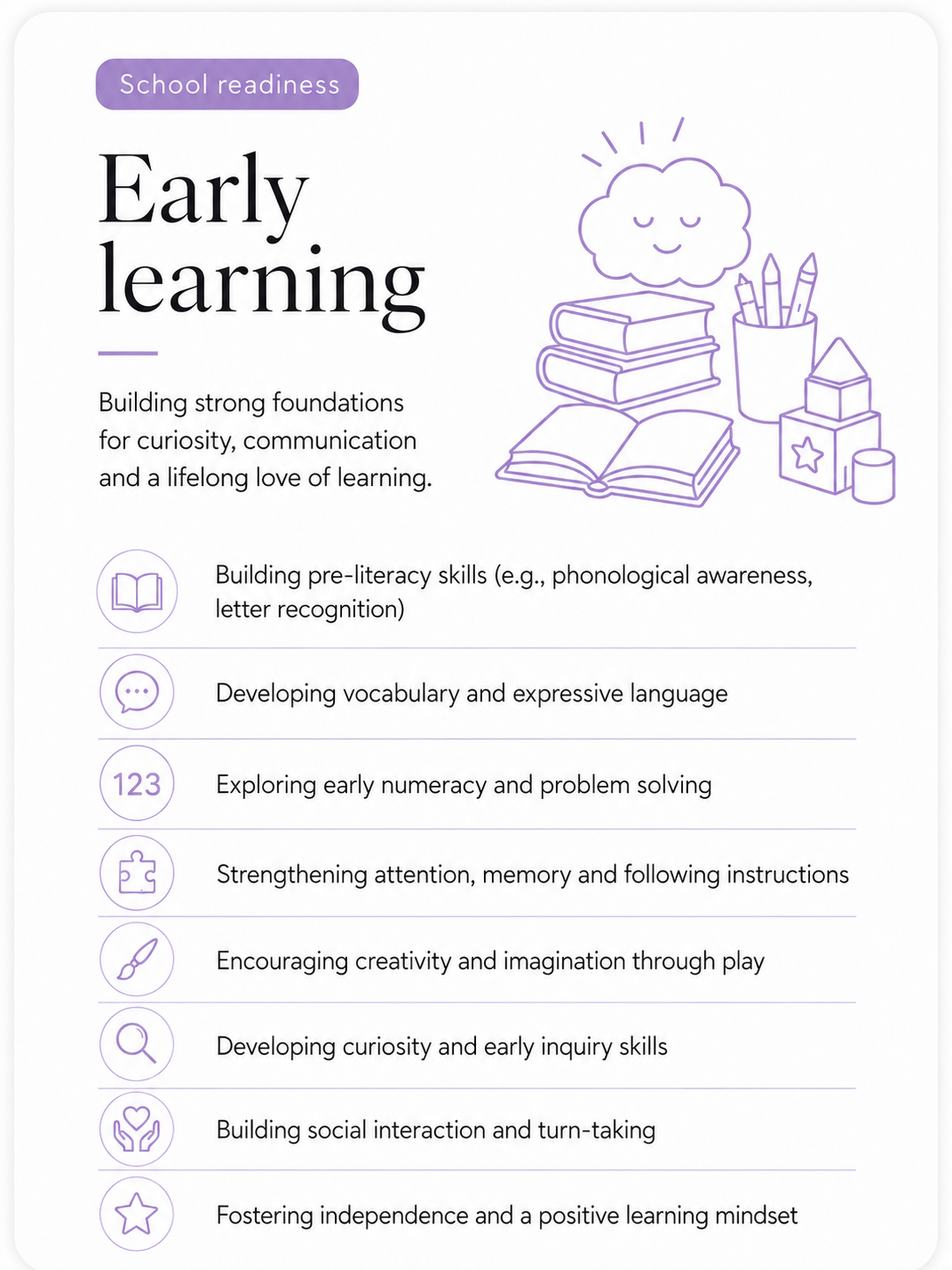
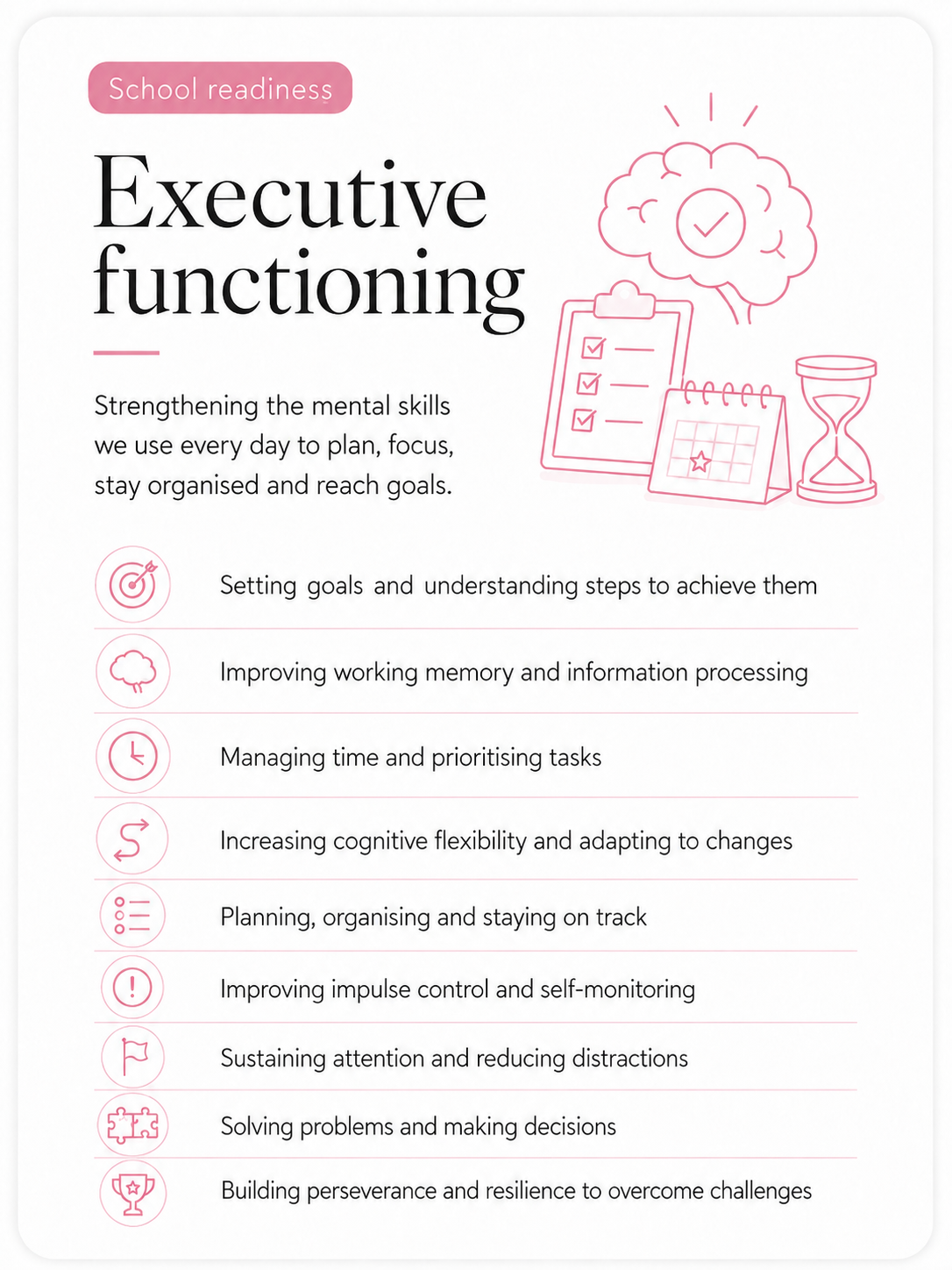
Our School Readiness Programme prepares children for the transition into formal schooling through structured group learning and classroom-based experiences. Children develop the confidence, independence, and foundational skills needed to navigate classroom routines, learn alongside peers, and participate meaningfully in everyday school life.
Working within a small group setting, children build communication, social, self-regulation, and early learning skills through engaging activities that reflect real classroom experiences, supporting a smoother and more confident transition into school.
-
Our School Readiness Programme is suitable for children preparing to enter preschool or primary school who would benefit from additional support in developing classroom readiness, independence, communication, social interaction, and early learning skills.
-
Children develop a range of skills that support a successful transition into school, including:
Following routines and classroom expectations
Listening to and following instructions
Participating in group learning
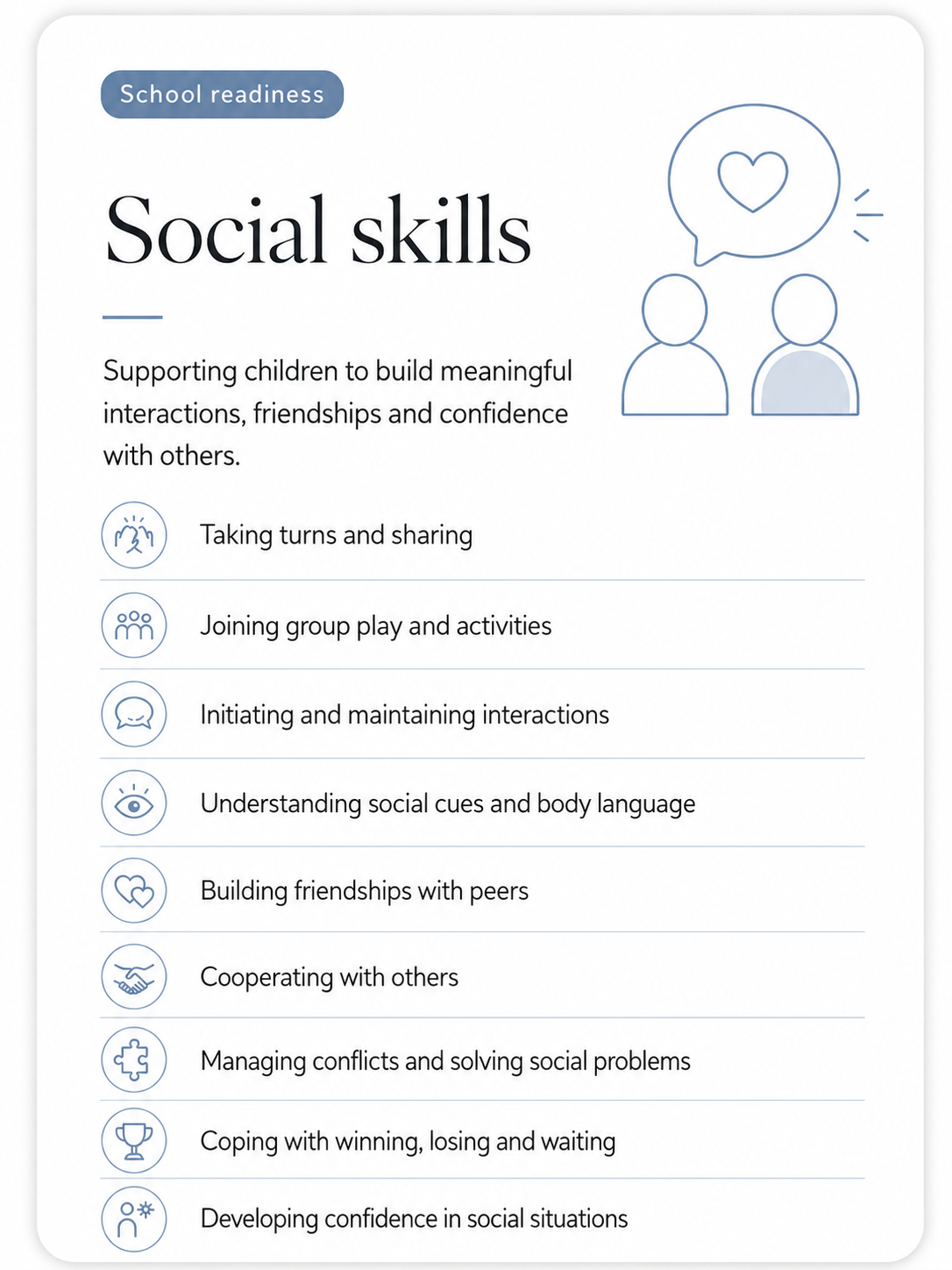
Building friendships and social confidence
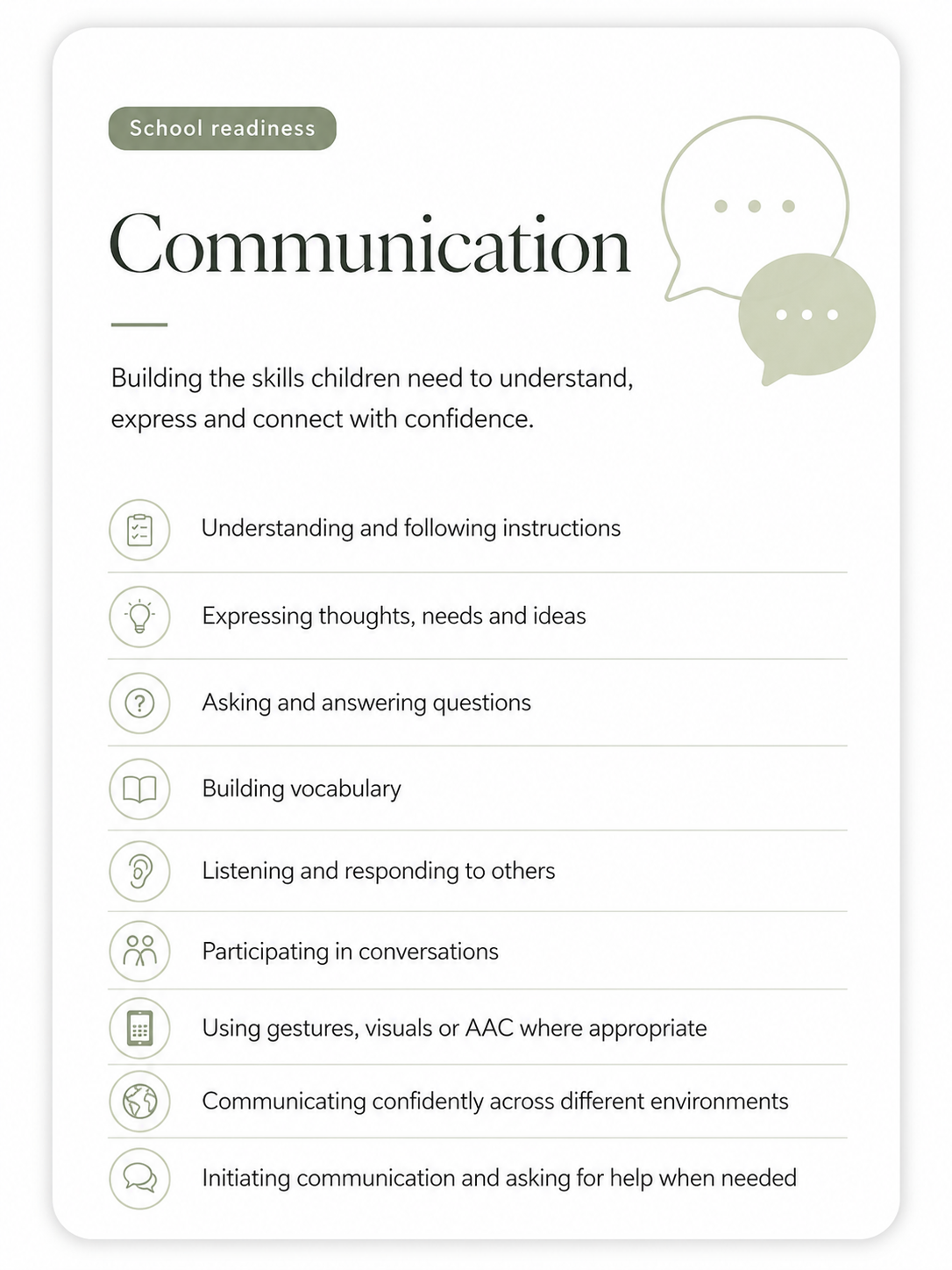
Communication and language skills
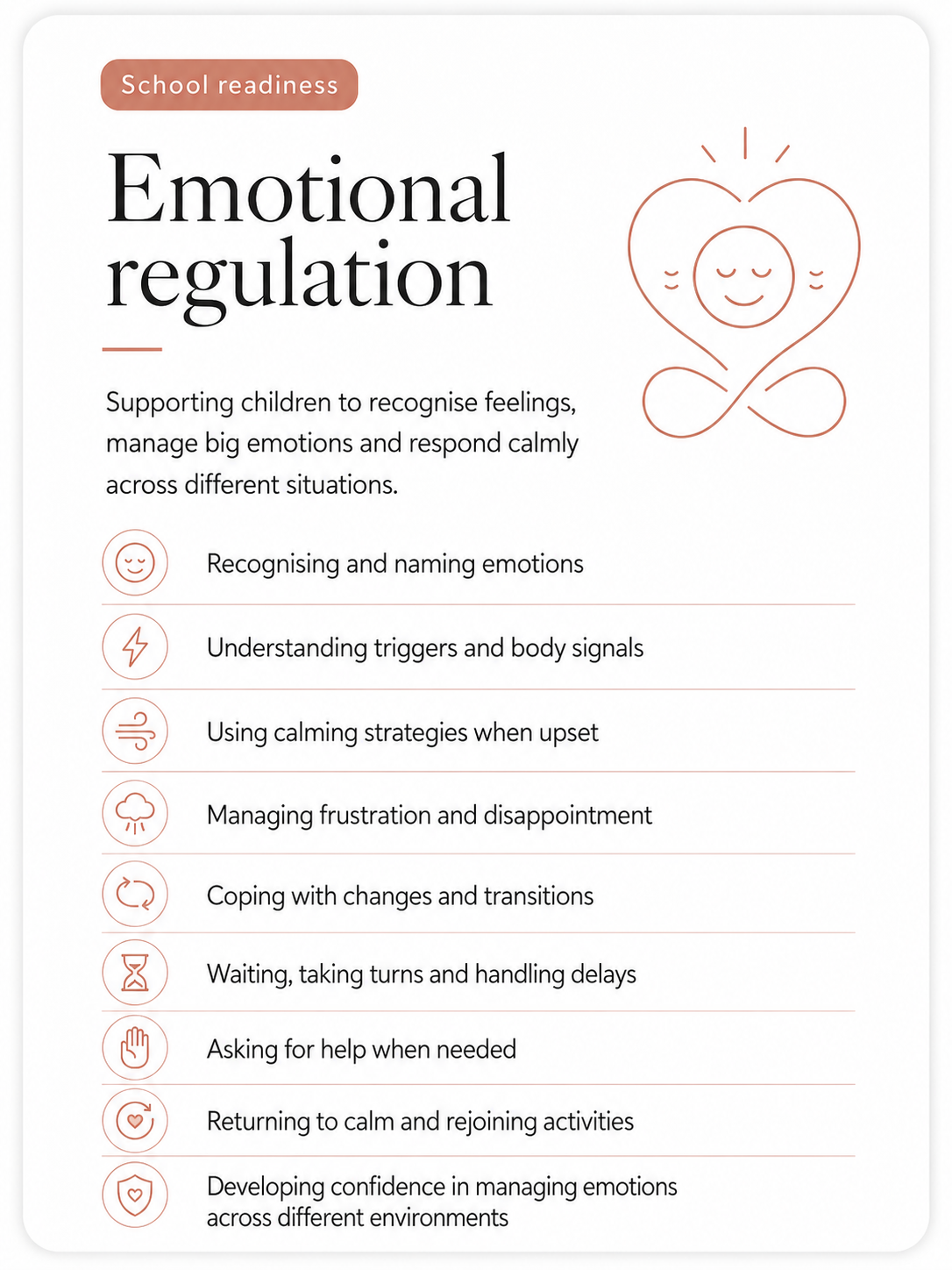
Emotional regulation and flexible thinking
Early literacy and numeracy foundations
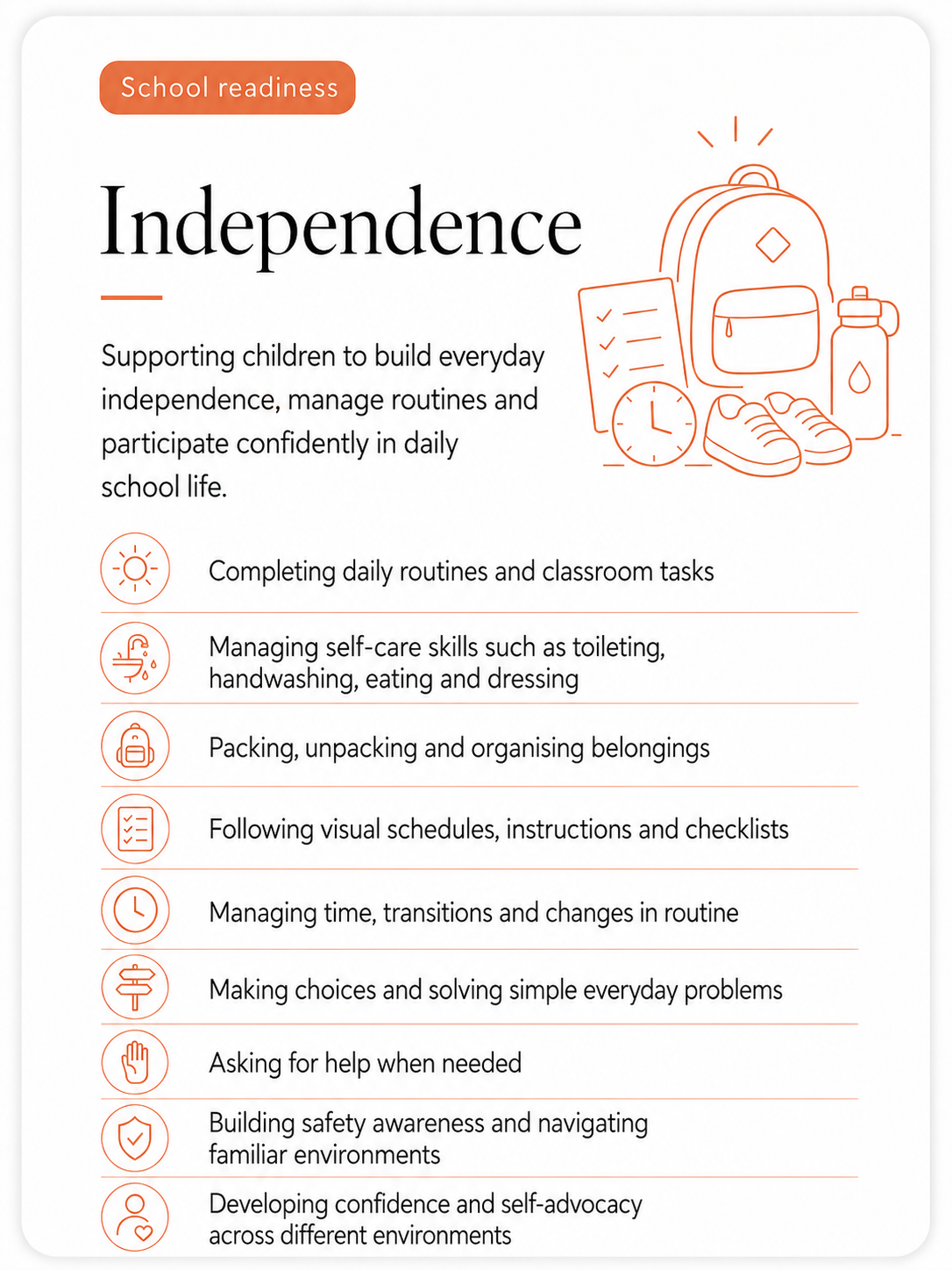
Independence and self-help skills
-
Sessions are delivered in small groups to provide opportunities for peer learning and real-life classroom experiences. Activities are carefully planned to balance structured learning, play, movement, and collaborative tasks, allowing children to practise skills in meaningful and engaging ways.
-
Learning alongside peers allows children to practise important social and classroom skills that are difficult to develop in individual sessions alone. Children learn to take turns, work together, solve problems, communicate effectively, and become comfortable participating within a group setting.
-
We maintain a low student-to-teacher ratio of 1:3, with a maximum of 6 children per class, to ensure every child receives meaningful individual support within a collaborative group environment. This balance allows therapists to tailor guidance to each child's needs while providing authentic opportunities to practise classroom routines, social interaction, communication, and independent learning alongside peers.
Key skills we develop